Wondering what Surveillance is showing up in the Maui County Budget? Here is the 2027 Proposed Budget, 2026 Budget, and 2025 budget line items that contain mass surveillance, with a quick summary:
Summary:
Maui County Budget contains 3 primary categories for surveillance: license plate readers, drone technology, and helicopter technology. With what appears to be an annual cost of $3+ million, and over $1 million in surveillance tech, we count the helicopter.
2027 Surveillance in Budget (proposed)
AI Capable License Plate Readers
910059B-6020 Film & Camera Supplies: Budget transferred from 910493B-6020. Funding for costs related to Technology for cameras and license plate readers used in investigations. $650,000
How Much are Helicopters?
910420B-6112 Contractual Service: Budget transferred from 910420B-6132. Annual cost dedicated to police Operations ($3M);Operations/Flight Time ($600K). $3,600,000 910420B-6132 Professional Services: Budget transferred to 910420B-6112. –$3,600,000
How Much are Drones?
910059B-6035 Miscellaneous Supplies: Funding for annual cost of Special Investigations- Radio Isolation Bags, containers, storage devices, filters, equipment, supplies, Drone propellers, batteries, maintenance, Undercover cell phones, tablets, and pre-paid cards. $225,000
910059C-7044 Other Equipment: Purchase of (2) Drone Chargers at $4,000 each, (1) Evidence Storage Server at $100,000, (1) Vacuum Metal Deposition Machine at $ 8,000, (4) Autel Max 4N Drones at $14,000 each, Analysis Cartridges for rapid DNA at $100,000, and 100 life cycle Drone Propellors at $10,000. $278,000
Real Time Operations Center
*Additional Funding Federally
910059B-6129 Other Services: Additional funding for Annual Cost for RTOC Software, Camera Integration, Central Command Community, and WAVE Software. $1,720,000
More Software Please
910026B-6138 R & M – Services/Contracts: Increase funding for annual Cost of Services: Pen Link, VPN Lines, and Specialized Service. $47,000
910059B-6212 Dues: Additional funding for annual cost of License Renewals/Memberships Passware Premium, Cellebrite, Magnet Forensics, MSAB, Sumuri, Axon, NetSpark, Teel Tech, Monolith, Passmark, Get Data, OSINT, DataPilot, Whooster, FirstTwo, and Leica. $800,000
2026 Surveillance in Budget
Artificial Intelligence Technology
910493B-6020 Film & Camera Supplies: Council added funding for costs related to Artificial Intelligence Technology for cameras and license plate readers used in investigations. $650,000
More Drones Please
910059B-6035 Miscellaneous Supplies: Funding for Drone/SUAs propellers, batteries and maintenance, drone computer monitors/external screens, and wall mounted television. $310,000
Helicopter Costs
910420B-6132 Professional Services: Funding for Police training and flight time operations related to Helicopter with night time capabilities. $3,600,000
Tracking Software
910026B-6244 Computer Software: Purchase of Pen Link/Cellebrite Software. $5,000
910059C-7044 Other Equipment: Purchase of (1) 7-units Filter Forensic Drying Cabinets $11,500, (1) Autel Dragonfish Battery Bundle $7,000, (1) Electronic Badge Reader $7,000, (1) Flammables Cabinet $8,000, (1) Full Spectrum Imaging System II $90,000, (1) Mobile Field Work Station $8,000, (1) Portable X-Ray System $43,000, (1) Stainless Steel Equipment Cart $2,600, (1) Vacuum Metal Deposition Instrument $95,500 , (1) Wall Mounted Autopsy Sink $90,000, (1) WIFI Tracking Device $40,000, (2) DJI Power Bank 1000 $2,400, Analysis Cartridges for rapid DNA testing $150,000, Replacement of (2) Polarizing Compound Microscopes $15,000, and (2) Steremicroscopes at $18,000. $588,000
2025 Surveillance In Budget
Helicopter Tech
910420C-7044 Other Equipment: Council moved funding from Technical and Support Services Program for an RFP for the night vision helicopter equipment. $500,000
Drones Cost Money
910059C-7044 Other Equipment: Purchase of two drones with controller, spare parts, and tool kit integrated into Pelican case at $25,000 each; High capacity laptop computer with 360 laser scanning ($6,000); two printer/copier/scanners ($12,000); stainless steel equipment cart for the morgue ($2,300); two way communication negotiation throw balls ($9,000); drone/SUAS Team Autel Dragonfish ($170,000); Vacuum metal deposition instrument for latent fingerprint recovery ($92,500). $341,800
With growing community concern over the installation of ALPR (Automated License Plate Reader) Cameras and other relevant technologies, we have decided to compile a Maui Citizen’s Guide to Mass Surveillance for the year 2026. We will update this page as more information comes in, but here is our current understanding the types of systems in place and how they work, general pricing of these systems, the controversy surrounding these systems, the companies and people associated with these systems, any related court cases past and present, how the data is stored, and what policy decisions are coming, or have come to pass, associated with these technologies.
Types of ALPR Systems
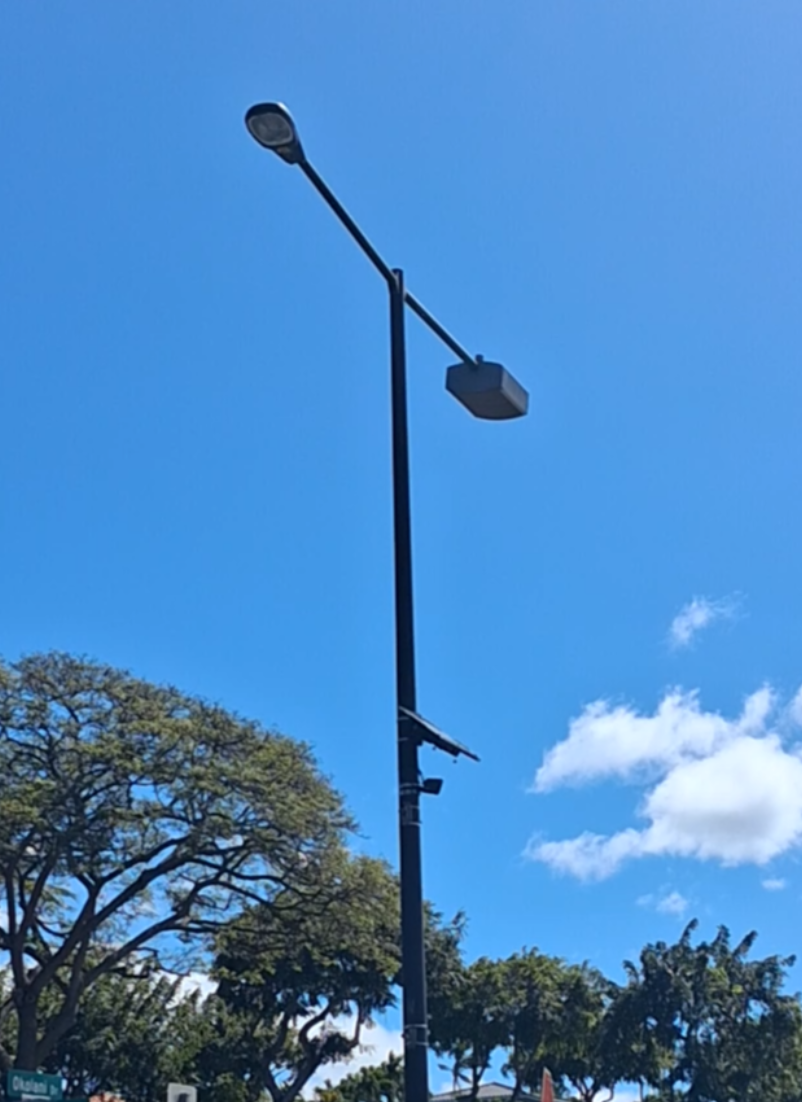
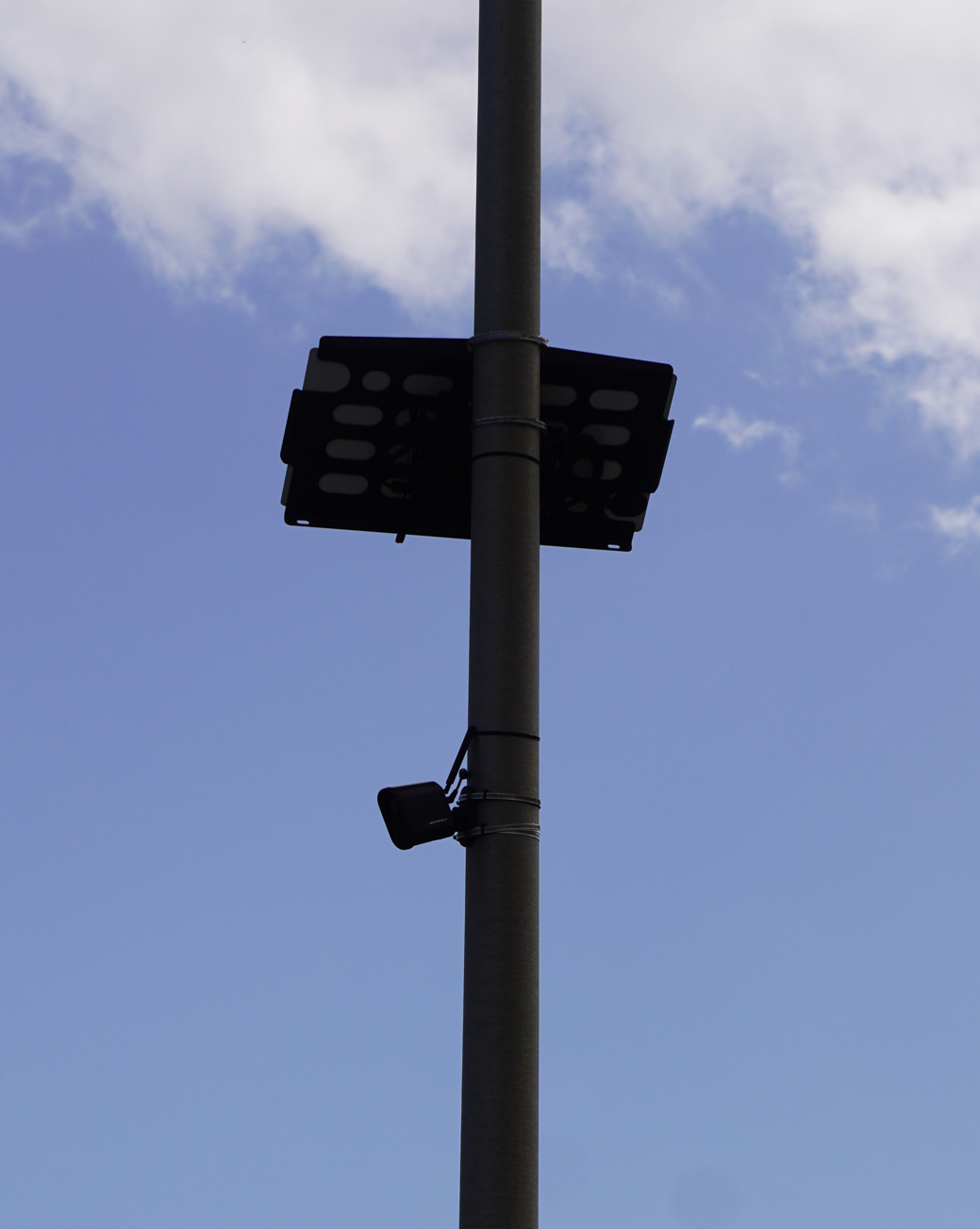
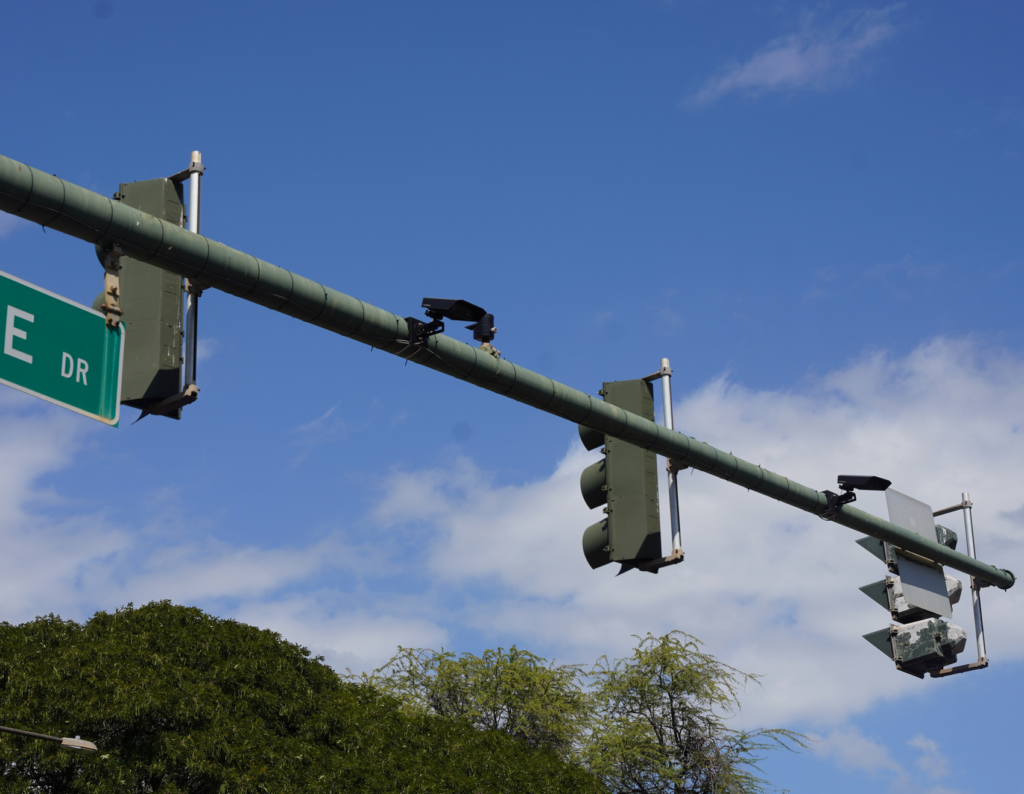
The types of ALPR systems in use in Maui County appear to be mostly Motorola based systems, although there are a few other newer installations of other brands. The Motorola cameras currently in use are:
The primary software that these plug into is Vigilant VehicleManager, which integrates with Assist AI (An AI integration that searches for specific details about vehicles). VehicleManager “…quickly identif[ies] vehicles that are regularly traveling with eachother or are often parked next to eachother”, and “recognizes…aspects of [vehicles] – like accessories, damage, and promotional writing or bumper stickers.” As of March 23, the site DeFlock has mapped and recorded 37 ALPR cameras on Maui, which, according to a representative of the Maui Police Department, “…is being stored in a cloud indefinitely.” With this software, or similar software applications, everyone on Maui that drives a vehicle is being tracked and analyzed by artificial intelligence software. These cameras are not labeled, some are placed discreetly, and their number is growing. To see a more in depth explanation of how PlateSearch in VehicleManager works (from 3 years ago seems to be the most recent deep dive), click here.
Map of ALPR Cameras
The Price of ALPR Systems
The thing everyone wants to know is what is the price. How much are Maui County citizens paying to mass surveil themselves? The L6Q, for the closest model we can decipher on the Motorola 2024 price list, MSRPs for $6495, and the L5F MSRPs for the same price. There are many potential addons that likely drive up the price, subscriptions packages that bring the price up more, and Data Platforms that, for 10-200 sworn officers, MSRP for $19250. If we do the basic math on these at MSRP, without any additional accessories and just the hardware, these cost around $240000, with the software and transmission packages pushing the cost closer to $300000, with residual software payments. Maui Police Department has chosen not to release this information to the public, so we have to speculate based on publicly listed prices by Motorola.
Current Controversial Use Cases:
To see where the danger lies in these technologies, we will need to look outside of Maui County. First let’s review the best articles that compile the concerns, including:
Section 6. The right of the people to privacy is recognized and shall not be infringed without the showing of a compelling state interest. The legislature shall take affirmative steps to implement this right. [Add Const Con 1978 and election Nov 7, 1978]
SEARCHES, SEIZURES AND INVASION OF PRIVACY
Section 7. The right of the people to be secure in their persons, houses, papers and effects against unreasonable searches, seizures and invasions of privacy shall not be violated; and no warrants shall issue but upon probable cause, supported by oath or affirmation, and particularly describing the place to be searched and the persons or things to be seized or the communications sought to be intercepted. [Am Const Con 1968 and election Nov 5, 1968; ren and am Const Con 1978 and election Nov 7, 1978]
This Legislation is currently, as of March, in the Hawaii State Senate. This authorizes:
PART III
SECTION 3. Section 291L-2, Hawaii Revised Statutes, is amended to read as follows:
“291L-2 Automated speed enforcement systems program; established. There shall be established the automated speed enforcement systems program, which shall be implemented by the State to enforce the speed restriction laws of the State. The automated speed enforcement [system] systems program [shall be limited to only those locations where a photo red light imaging detector system has been implemented pursuant to chapter 291J.] may be implemented in any high-risk location of a state or county highway as determined by the department based on an analysis of the studies conducted pursuant to section 291L-3(c); provided that the department may consult with the judiciary regarding implementation; provided further that the judiciary shall not control or delay the department’s authority to determine camera locations or implementation timelines.”
SECTION 4. There is appropriated out of the state highway fund the sum of $ or so much thereof as may be necessary for fiscal year 2026-2027 to be deposited into the automated speed enforcement systems program special fund.
SECTION 5. There is appropriated out of the automated speed enforcement systems program special fund the sum of $ or so much thereof as may be necessary for fiscal year 2026-2027 for the expanded implementation of automated speed enforcement systems and operation of the automated speed enforcement systems program.
The sum appropriated shall be expended by the department of transportation for the purposes of this part.
PART IV
SECTION 6. Chapter 291C, Hawaii Revised Statutes, is amended by adding a new section to be appropriately designated and to read as follows:
Ҥ291C- Automatic license plate recognition; citations. (a) A county may use automatic license plate recognition systems to identify vehicles that do not properly display a current certificate of inspection or certificate of registration.
(b) A county may issue a citation to the registered owner of a vehicle identified under subsection (a). The citation shall include a fine of no less than $75 and no more than $200; provided that the fine shall be waived if the registered owner demonstrates that the vehicle properly displays a current certificate of inspection or certificate of registration within thirty days after issuance of the citation. Any fines collected pursuant to this subsection shall be used for the maintenance of the automatic license plate recognition systems and public education regarding the use of the systems and vehicle inspection and registration requirements.
(c) All data collected by an automatic license plate recognition system under this section shall be used only for the purposes for which the data was collected and shall be destroyed or permanently erased within ninety days if the data is not part of an ongoing investigation, enforcement action, or citation record. Access to automatic license plate recognition system data shall be strictly limited to authorized personnel and be subject to strict privacy controls.
(d) A county, in coordination with the department of transportation, may utilize any system installed or operated under chapter 291J or 291L for purposes of identifying vehicles under this section that do not properly display current certificates of inspection or registration; provided that:
(1) The county and department of transportation shall enter into a written memorandum of agreement specifying roles, responsibilities, data-sharing protocols, access rights, permissible uses, and cost allocation;
(2) All data captured for the purposes of this section shall be handled in accordance with subsection (c); and
(3) Costs incurred by a county for use of a system installed or operated under chapter 291J or 291L pursuant to this section may be reimbursed from fines collected under this section.
(e) For the purposes of this section, “automatic license plate recognition system” means a technology system that scans the rear license plates of vehicles, automatically compares the plate information in real time against the applicable motor vehicle databases to determine whether the vehicle properly displays a current certificate of inspection and certificate of registration, and facilitates the issuance of citations or notifications to the registered owner when a vehicle is not in compliance.”
BE IT ENACTED BY THE LEGISLATURE OF THE STATE OF HAWAII:
RELATING TO LICENSE PLATES.
SECTION 1. Section 286-26, Hawaii Revised Statutes, is amended as follows:
1. By amending subsection (e) to read:
“(e) Upon application for a certificate of inspection to be issued for a vehicle or moped, an inspection as prescribed by the director under subsection (g) shall be conducted on the vehicle or moped. [If] A certificate of inspection shall be issued upon payment of a fee to be determined by the director if the vehicle or moped is found to be in safe operating condition, including [adhering to head lamp requirements and specifications pursuant to section 291-25(a), as applicable, and is not]:
(1) Not being equipped with a muffler or exhaust system that fails to comply with section 291-24 or 291-24.5, as applicable[, a certificate of inspection shall be issued upon payment of a fee to be determined by the director.];
(2) Adhering to head lamp requirements and specifications pursuant to section 291-25(a), as applicable; and
(3) Not being equipped with any cover or shield installed over the license plate pursuant to section 286-73, as applicable.
The certificate shall state the effective date, termination date, name of the issuing insurance carrier, policy number of the motor vehicle insurance identification card for the inspected motor vehicle as specified by section 431:10C-107 or state the information contained in the proof of insurance card as specified by section 431:10G-106, and the odometer reading of the vehicle on the date of inspection. A sticker, authorized by the director, shall be affixed to the vehicle or moped at the time a certificate of inspection is issued. An inspection sticker that has been lost, stolen, or destroyed shall be replaced without reinspection by the inspection station that issued the original inspection sticker upon presentation of the current certificate of inspection; provided that the current certificate of inspection and inspection sticker shall not have expired at the time the replacement is requested. The director shall adopt rules to determine the fee for replacement of lost, stolen, or destroyed inspection stickers.”
2. By amending subsection (g) to read:
“(g) The director of transportation shall adopt necessary rules for the administration of inspections and the issuance of certificates of inspection; provided that the rules shall[:], at a minimum:
(1) [At a minimum, require] Require inspections to ensure that a vehicle or moped is not equipped with a muffler or exhaust system that fails to comply with section 291-24 or 291-24.5, as applicable; [and]
(2) Include head lamp requirements that adhere to the specifications pursuant to section 291-25(a), as applicable[.]; and
(3) Require inspections to ensure that a vehicle is not equipped with any cover or shield installed over the license plate pursuant to section 286-73.”
SECTION 2. Section 286-73, Hawaii Revised Statutes, is amended to read as follows:
“[[]§286-73[]] Obstruction of a license plate; prohibited. (a) The use of any cover or shield installed over a vehicle’s license plate, regardless of transparency or intent, shall be prohibited.
(b) Any person, seller, or dealership who violates this section shall be fined no less than [$500 and no more than] $1,000 for each offense. Each day of violation shall constitute a separate offense.
(c) In addition to any person authorized to enforce this chapter, any person authorized by the State or a county to enforce parking violations, including any person authorized by a state or county law enforcement agency, may issue a citation for a violation of this section.
(d) For the purposes of this section, “cover” or “shield” means any device, material, or [film�whether] film, whether clear, tinted, mirrored, reflective, or otherwise, that is installed over or affixed to a license plate[, and is intended to alter or interfere with the visibility, legibility, or identification of the license plate by law enforcement or traffic enforcement systems].”
SECTION 3. Statutory material to be repealed is bracketed and stricken. New statutory material is underscored.
SECTION 4. This Act shall take effect on January 1, 2027.
Data Storage
Data storage is one of the most critical questions involved in understanding ALPR. If these systems are to be utilized, what is the right amount of time for a company to be able to hold these? Extended hold time means the creation of a footprint, where those being tracked are better understood by the systems in place.
Private Company Use
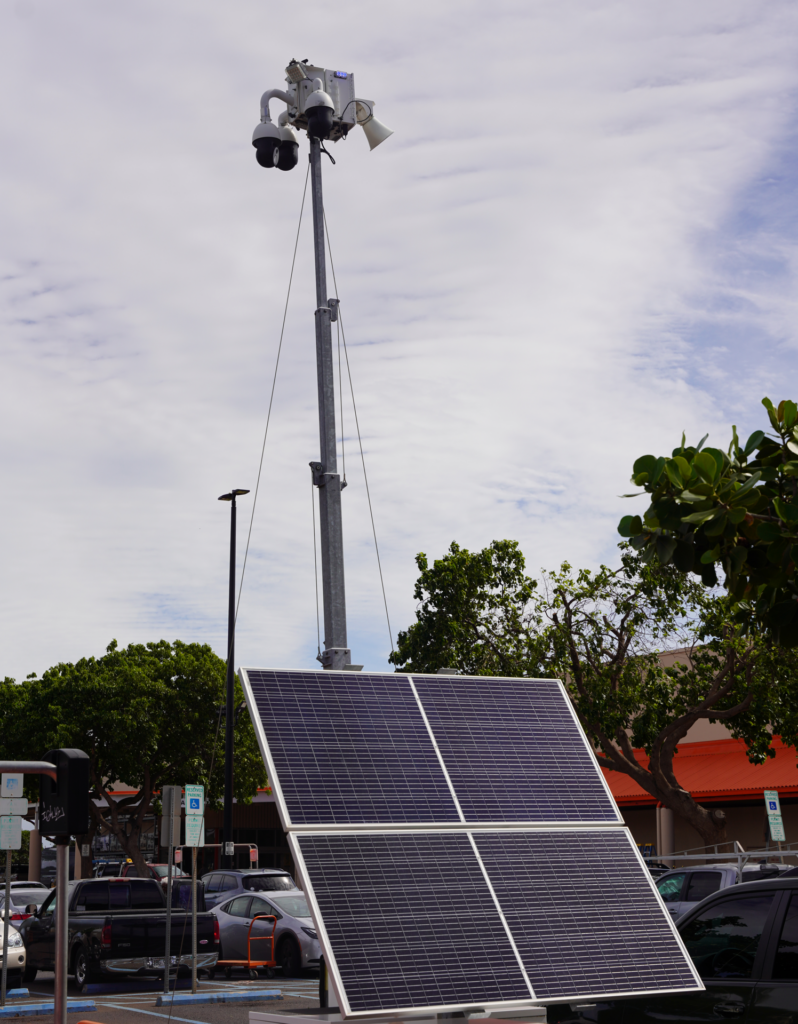
Many private companies on the island are using outside surveillance, but many of these cameras utilize ALPR technology, as well as other AI and recognition software.
One company on Maui is utilizing the Flock Safety system, which utilizes data on a national scale.
Feel free to email us your questions to news@valleyisleobserver.com, and we will try to get your questions answered on either this page or a new article.